
The dishwasher case: E24 and a five-variable household
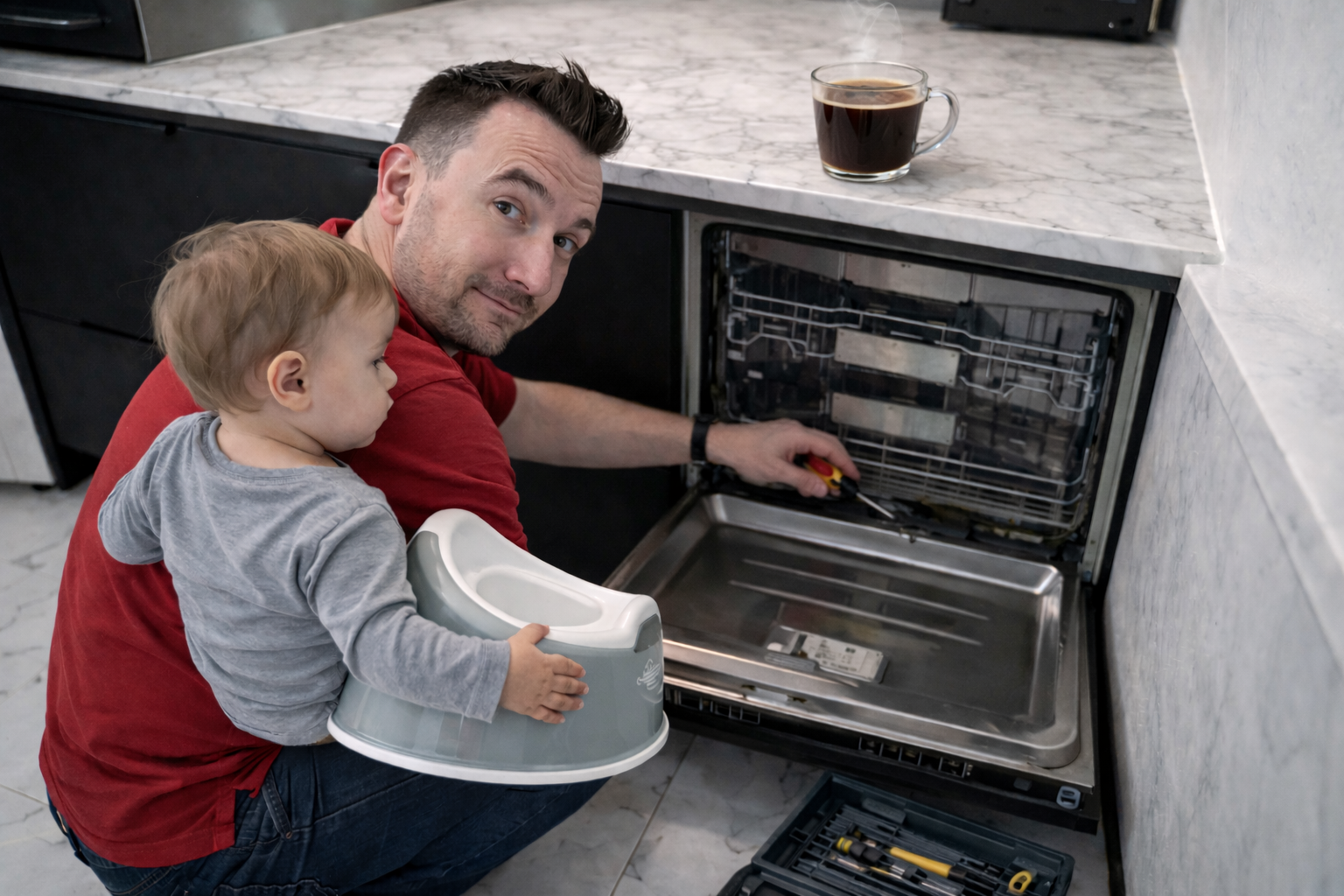
Pre-wash or just water?
I wanted kids. Lots of them. I have no idea why. It might be a manufacturing defect, but from the age of six I knew I wanted six children. When I met my wife, she asked how many I wanted. I said six. She didn't believe me.
These days she's a bit bewildered by that, which is entirely fair, because getting through a day with five is already a full-scale logistics exercise, and that is before anyone adds a dishwasher error code to the schedule.
This piece is not about how many children we have. It is about how the number is always there in the background, a bit like humidity in a ventilation measurement. It is also about the dishwasher, and about the special social position of the husband in Finland: a person who is expected both to solve problems and not to explain them, because explaining is boring. And if you explain anyway, you have to do it in a way that's both correct and interesting. Good luck with that.
At work people pay me quite a lot to walk into their buildings, inspect the technical systems and tell them what is wrong and what needs doing. At home I have the privilege of listening to my wife's thoughts on why the ventilation doesn't work, why the dishwasher has to be loaded in a particular spiritual order, and why this is not up for discussion. And I have to say this here: this is not a “wife versus engineer” setup. My wife is smart and conscientious, and her strength is that she genuinely cares that things work and that daily life keeps running. She just doesn't want to spend her life watching four YouTube videos about how detergent behaves in a closed circulation system. She wants to understand the essentials well enough that the next wash doesn't end in an error code. That is a sensible goal.
And that is my goal too. We just have different methods.
I don't buy the idea that being a man is inherently worth less, that a man is automatically hopeless with the physics of a home, and that intelligence does not survive contact with a kitchen. But there are battles I pick strategically. The dishwasher is one of them. I would rather wash up by hand. I am fussy about hygiene, and when the machine is loaded according to the golden household doctrine, it tends to produce “clean” plates that require faith. Washing up by hand is simple: water goes in, water goes out, dirt leaves the system. Reality behaves.
The dishwasher doesn't behave like that.
Last night we agreed that I would stay at home today with our two-year-old, who had a fever yesterday. In Finland you do not take a child to daycare if they had a fever the day before. They have to be fever-free and completely well for at least one whole day before going back. That is the rule. Everyone knows it. It is one of those shared social contracts we all obey, even when the child is plainly healthier than the adults.
My wife is a conscientious employee. She doesn't like being away from work and she always worries that if she doesn't go in, it makes life hard for everyone else. This is one of her best qualities, and I mean that as an assessment, not as a romantic statement. Reliability is rare. Thoughtfulness is rarer. She has both.
Since I was the one who could stay at home, I offered. That is where the story starts. Or it starts slightly earlier, because the evening before I had made the responsible adult decision to stay up late watching educational videos about technology.
I like learning. I like systems. I like an explanation that has variables and constraints in it instead of just vibes. A large part of what I know about dishwashers, including everything that was about to happen today, comes from YouTube channels that treat detergent as something between a chemistry lab and a lifestyle choice.
I went to bed around three, assuming that a sick toddler would wake me in the night. Didn't happen. The toddler was completely fine. At three I checked once more. No fever. Sleeping deeply, the way a toddler should. I thought this was going to be an easy morning. A long lie-in with the little one. My plan was realistic, coherent, and immediately incompatible with the existence of the other four children.
At half past seven I was woken up anyway, because the seven-year-old had decided that her school bag weighs a tonne and she also has to take her skates and it's cold and icy and dangerous outside and the bag is heavy and she's in a hurry and she needs a lift. The school is about 300 metres from our door. That tells you the scale of the emergency: 300 metres and one drama per metre.
This is the trouble with daughters. They can look so sweet and so polite that your brain tries to be kind even when the request is objectively ridiculous. In this case saying no was easy, because I had to stay at home with the two-year-old. Children have an answer for everything, though. She explained that the older boy's school starts later and he can watch the toddler for ten minutes. Besides, the toddler is asleep. This was presented as a complete risk analysis.
So I put myself together, made coffee, brushed my teeth, went out to the car and sat there waiting.
The coffee was hot. I remember that clearly, because it matters for the tragedy later.
While I waited, the system added load. Two more daughters jumped in, because why not. The concept of “only the person who asked for the lift” doesn't exist in a five-child household. A family is a fluid. Create a pressure difference and everything flows into it.
So now there were three of us sitting in the car waiting for the original petitioner, which meant my coffee had time to cool in a way that felt personal.
I got everyone to school and drove back home. The whole operation took minutes, but I was awake now, so going back to bed was off the table. Sleep is a delicate system. Once the pressure drops, it doesn't recover without a rebuild.
I sorted out the ten-year-old boy and brushed his hair, because he is committed to going to school looking like a punk. I would rather he didn't look like a member of a 1970s band who has been thoroughly exploited by the music industry, but apparently I don't get to decide everything. This is an important theme in fatherhood: you administer the systems, but you don't fully control them.
Once everyone was out of the house, the two-year-old woke up and needed food. Then I finally got to make myself some breakfast and drink the coffee I had brewed the moment I woke up.
I forgot to drink it.
It sat there on the worktop, cooling with dignity, like an adult waiting in a room full of children. The coffee was no longer a drink. It was a timestamp.
I was just about to eat. I was carrying my used dishes over, because we don't leave dirty dishes on the table and this is not negotiable, and that is when I noticed the dishwasher had stopped.
Situation report
I checked it.
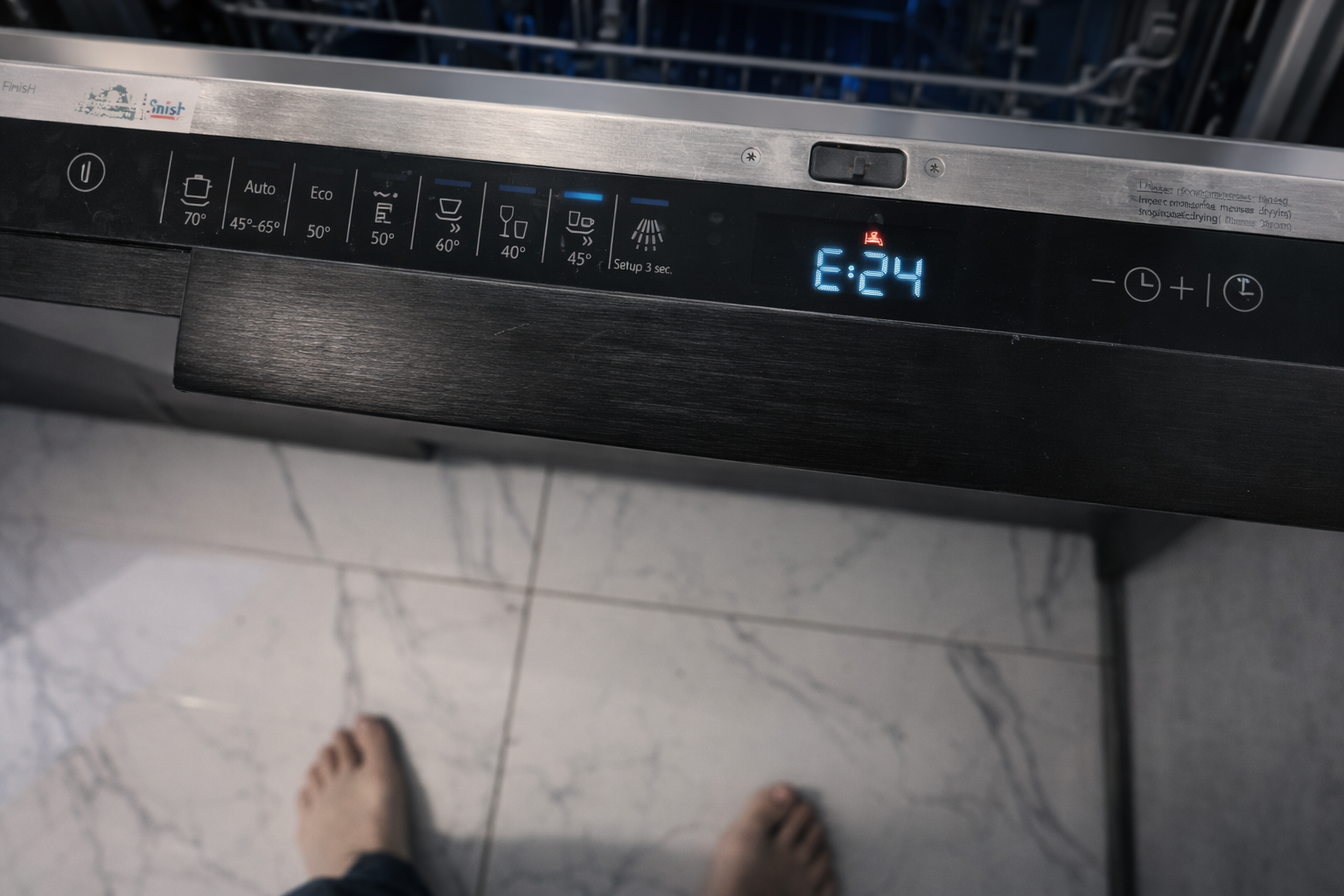
Error code: E24.
I opened the machine. It was packed full according to my wife's loading logic. No surprise there. It was packed as if the goal were to use every last cubic centimetre of free space, and to do it in a way that makes you feel guilty for mentioning physics. But she packs it that way because in her experience daily life works when capacity is used right to the last centimetre. In our house capacity is never empty. It is only temporarily in someone else's hands.
I texted my wife to ask whether she knew anything about this. She replied: yeah, yeah, yeah, before seven, over breakfast on her way out to work, she had started it something like four times. Something is wrong.
I took a photo of the error code and googled what it meant, because I don't remember every dishwasher error code by heart. My coffee watched all this calmly from the worktop. It was lukewarm now. We had both accepted our roles.
E24 means the machine can't get the water out. The drain is blocked, or the drain path is so restricted that the machine cannot finish the drain phase.
At this point a lot of people assume that a dishwasher is basically a box with water spraying about inside it, and that if the water doesn't leave, you treat it like a blocked sink. That is wrong, and it matters, because a dishwasher is not an ambitious sink. It is a recirculating system.
The error code and a quick recap of the theory
A dishwasher doesn't flush water continuously down the drain the way you do when washing up by hand. It fills the sump with a surprisingly small amount of water, typically about four litres, and then recirculates that same water. The pump draws water from the bottom, forces it into the spray arms, and the arms spin under hydraulic force, spraying water at the dishes. The water falls back to the bottom, passes through a filter that catches the bigger pieces, and then the same water goes round again.
In other words: a closed loop. A small amount of water, maximum work.
This is also why it has to drain in stages. If it tried to do everything in one go, the water would turn into soup and stay soup. So a “Normal” or “Auto” programme is usually at least two separate wash events with a complete drain in between.
The first event is the pre-wash. It fills with fresh water and sprays for about fifteen minutes. The aim is to shift the loose dirt and start dissolving whatever dissolves. Then it drains that dirty water completely.
The second event is the main wash. It fills with clean water again. This is the longest phase, often sixty or ninety minutes. This is where the detergent dispenser is released electrically. The machine heats the water, in European models usually to somewhere between fifty and seventy degrees, and circulates it to shift the baked-on food.
After that it drains the soapy water and does one or more rinses with clean water to remove detergent residue.
What this means in practice: the machine assumes that chemical work is happening in both phases.
I told my wife that the drain was blocked. I said we should use powder from now on and not pack the machine so full. I also said that using salt matters. Then came the questions: why, why, why. She wants to understand. And that is fair.
This is a familiar situation: I am an engineer, and she still doesn't automatically believe me on the strength of a job title. Honestly? Good. Authority without an argument is not a very functional model. The only problem is that my way of making an argument is usually “watch these four videos”.
So I sent her four videos, because most of what I learned myself came from them. Then she wrote back: could you just explain it more simply. She watched six minutes of one video, but it's boring.
And that was the moment I understood, again, that my job is not to be right. My job is to be brief.
The easier explanation
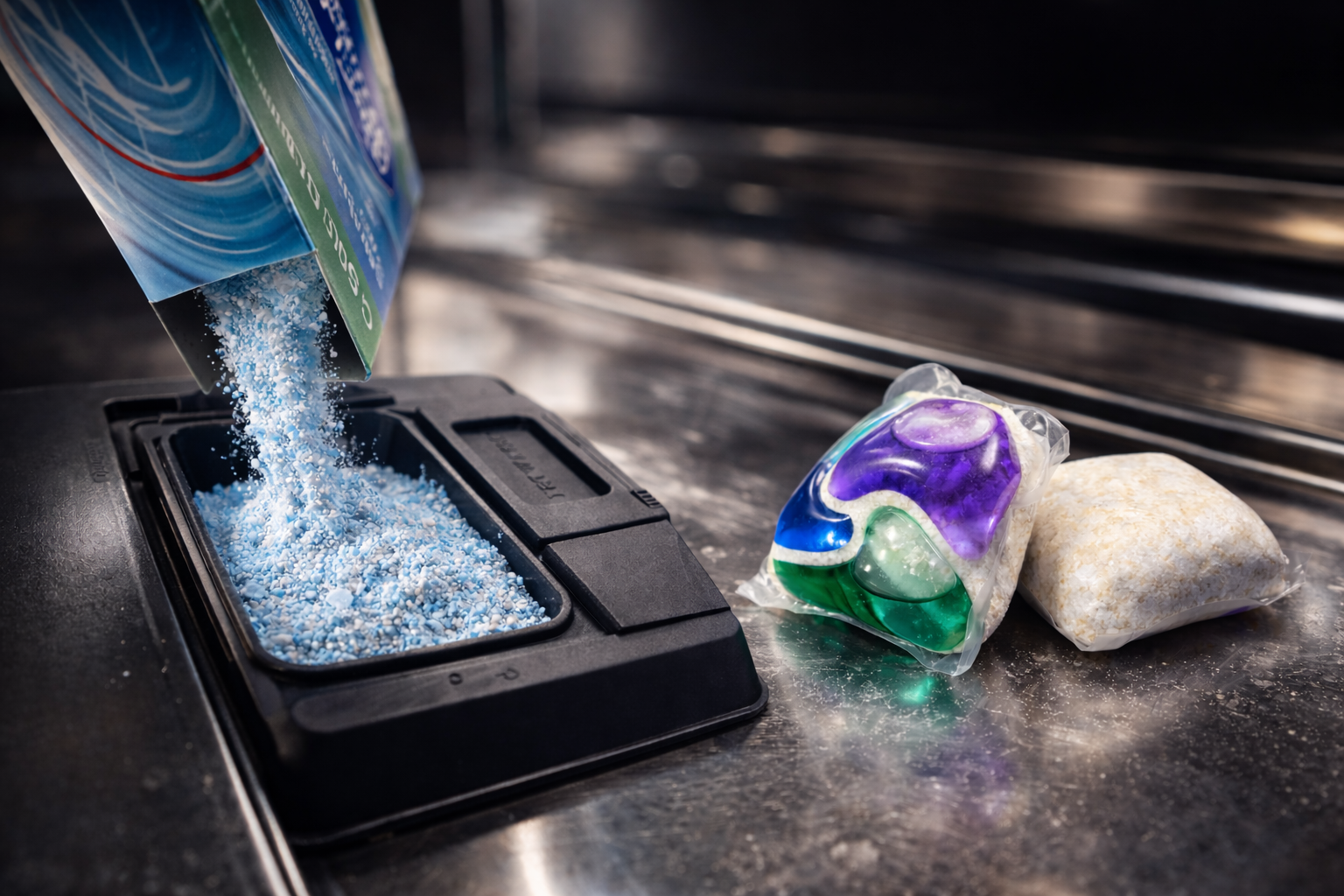
The core problem with “all-in-one” detergent tablets is structural. If you put one tablet in the dispenser, the dispenser flap stays shut for the whole pre-wash. That means the pre-wash is done with water alone.
Water is polar. Oils and fats are non-polar. They don't mix. Without detergent in the pre-wash, greasy soil warms up, comes loose a little, and then circulates around inside the machine. It doesn't emulsify. It never becomes something the water could carry along with it and rinse down the drain when the pre-wash ends.
Instead the grease coats surfaces. It coats the filter. It coats the sump. It turns into a slimy sludge. The machine is then asked to drain and refill, but the drain path is now trying to move water through a system that has been given a coating of warm fat, hair and bits of food.
And then you get an E24, and your coffee becomes a situation report.
Loose powder, or even gel, lets you add a small amount of detergent specifically for the pre-wash. Many machines have a pre-wash cup, but even if yours doesn't, you can simply put a small amount on top of the closed dispenser flap or in the pre-wash recess before you shut the door. The point is that detergent has to be present from the first minute, not only from the moment the flap opens.
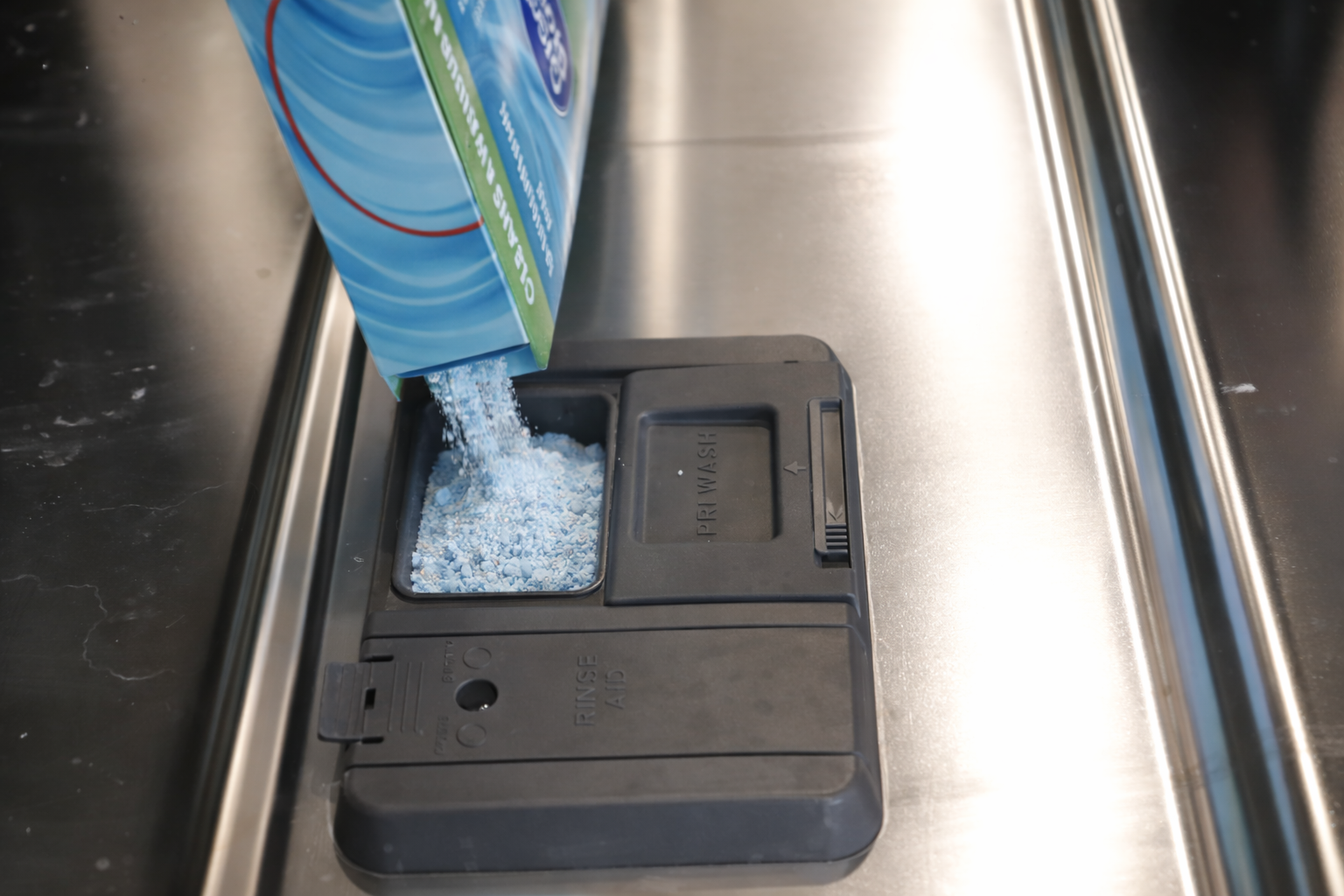
Detergents are surfactants. They lower the surface tension of the water and form structures that trap droplets of oil so that the oil can mix into the water and be rinsed away. You don't need much. A teaspoon or a tablespoon is enough to make the pre-wash actually wash.
If you do this, the machine can remove most of the heavy grease in the first fifteen minutes and rinse it away. Now the main wash starts with clean water and fresh detergent on dishes that are already mostly clean. The enzymes can concentrate on baked-on food instead of fighting a layer of fat.
This is not a philosophical preference. It is a two-stage process. Stage one removes the bulk. Stage two does the precision wash.
If you skip stage one chemically, stage two has to do both jobs, and it does both of them badly.
Anyway. E24. The water isn't leaving. Enough theory. Time to do some work.
Repairs and variables
I took everything out of the machine.
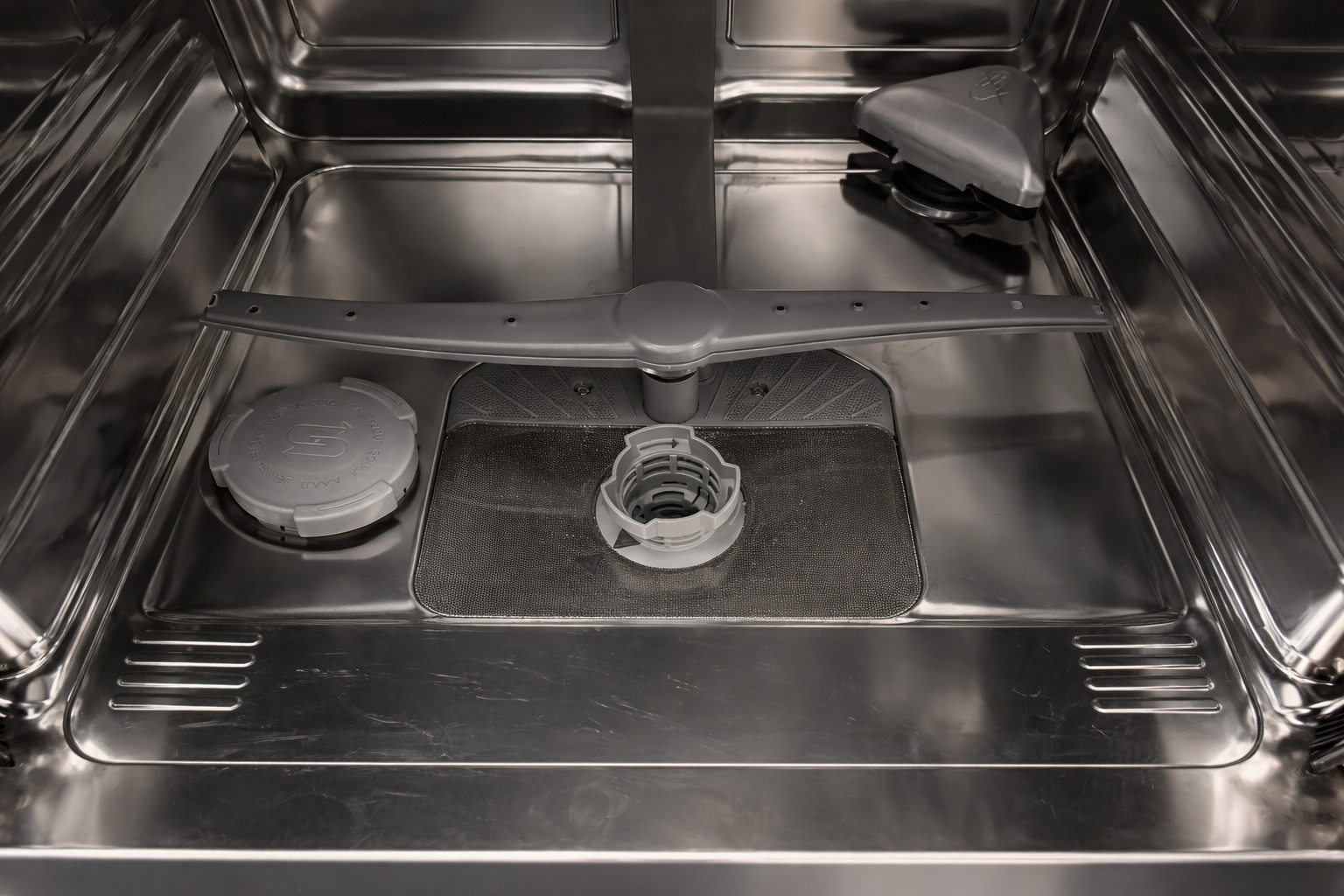
Of course the bottom of the machine was full. Full of water and full of the kind of organic soup that proves people shouldn't be allowed to treat plates as a food waste bin.
I glanced at my coffee. It was now the temperature of disappointment.
I started hauling the gunk out. And then, of course, I felt something sharp.
I cut my finger.
Why. Because there was a decent-sized shard of glass down in the drain area. I got it out. That shard on its own wouldn't block everything, so it was not the whole problem. I pulled out hair, because we have cats and somehow cat fur ends up in the dishwasher, even though the cats have never once offered to load it correctly. I pulled out slimy, greasy food mush.
And there it was. The entire argument, physically present.
Slimy and greasy.
Grease in a recirculating system is a slow disaster. If the machine is forced to run the pre-wash on water alone, the grease doesn't emulsify. It warms, spreads and builds up in layers. It turns into sludge. The sludge collects in the sump and in the filters, and the drain path narrows. Then the pump tries to drain, fails, and you see E24. The machine isn't angry. It is reporting a physics problem.
I cleaned everything I could reach. Then I tried again.
Still doesn't work.
So now we moved into the phase my children describe as “when Dad is in projects”.
I fetched the tools. I pulled the dishwasher out so I could get at the hose. I detached the hose, flushed it through, cleaned it, put everything back together and pushed the machine back in.
Machine out. Hose off. Flush. Reassemble. Back in. And at this point a normal household would let one adult concentrate on one task.
We don't live in a normal household.
Right in the middle of all this, the two-year-old produced an enormous poo in the potty.
They walked straight past my coffee into the living room to announce the achievement like a victorious general.
I left the dishwasher half open and went to offer congratulations, because progress is progress, and in a family you don't skip a milestone even when you're half covered in grease. Quick hand wash. High fives with the two-year-old. Then the potty was carried to the toilet like a ceremonial offering and emptied.
Naturally the lid had to be closed by the two-year-old personally. Naturally the climb onto the toilet and the flush had to be done personally too. Then I washed the potty and the toilet.
Either before all of this or during it, I also washed a small bottom while holding a small person in the air without dropping them, and without smearing them with the greasy mush that had attached itself to me during the dishwasher project.
This was not a clean transition between systems. This was cross-contamination management.
My coffee was still on the worktop, by now so cold it might qualify as a different category of beverage.
After the side quest I went back to the dishwasher and realised I had already forgotten which screw had come from where.
So the next project was working out which screw belongs where. They live in the same drawer as my authority: both vanish the moment the kitchen demands attention.
Eventually I got the dishwasher back together. Once it was assembled, I washed myself and ran the machine empty so it could clean itself.
One extra detail that matters in Finland
This is a good moment to mention one extra detail that matters in Finland.
European dishwashers often have a built-in water softener that runs on dishwasher salt. There is a salt reservoir. Inside the machine there is an ion exchanger that removes calcium and magnesium from the water before the water reaches the wash chamber. This matters, because detergent does its chemistry with the minerals first.
Hard water neutralises detergent. You need extra detergent just to bind the minerals, and only after that do you have any detergent left over for the dishes.
Soft water doesn't do that. In soft water a small amount of detergent is extremely effective.
If you keep the salt reservoir topped up, the water inside the dishwasher is soft regardless of what the municipal water is like. So in Finland there is an advantage that people ignore while buying the most expensive form of detergent on the shelf.
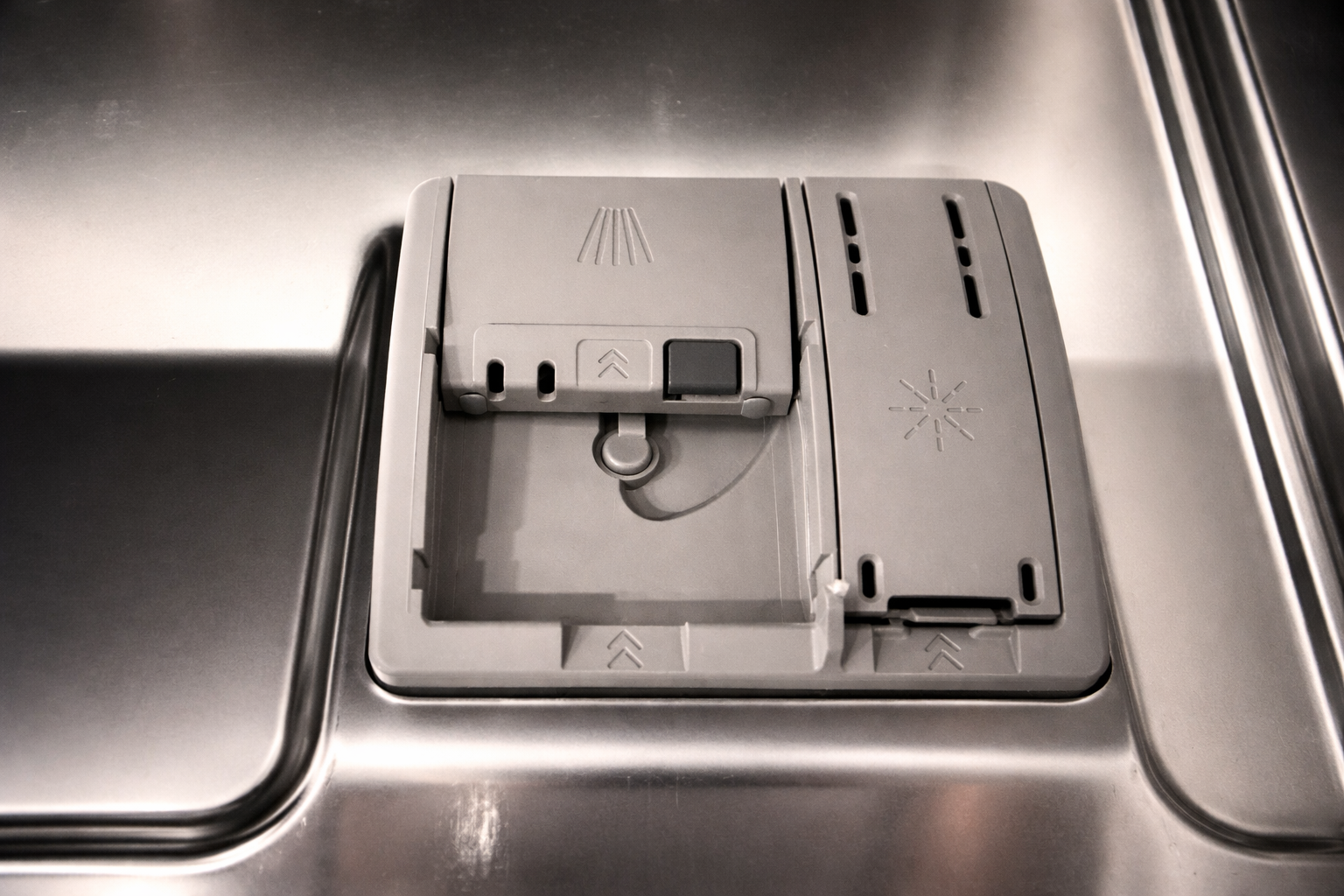
Tablets are a fixed dose. They are often formulated for the worst case: hard water and no softener. In a machine that makes its own soft water, that fixed dose can be an overdose.
Overdosing in soft water causes its own problems. It can make rinsing harder and leave a slimy film or a chemical taste. It can also be aggressive towards glass. Too much detergent in soft water can etch glassware, stripping ions out of the structure of the glass itself and creating permanent cloudiness that can't be washed off. If you have ever seen glasses that look “foggy” forever, that isn't dirt. That is damage.
Loose powder gives you control. In softened water you can use less. You can fill the compartment only to the first line, or roughly a tablespoon. You can also put a small amount on top of the closed flap for the pre-wash. You match the dose to the conditions of the system. That is how all engineering works. You don't run at full power just because there is a dial.
Meanwhile I washed dishes by hand and cleaned the kitchen, and myself, as well as I could. My coffee stayed where it was, a silent witness and a recurring punishment. By this point it had stopped cooling. It had reached equilibrium with the flat.
Once the dishwasher situation stabilised, I made lunch for the little one and got them ready for a nap. I considered throwing the coffee away, but that felt like admitting defeat.
Then my older daughter came home. I told her the story, obviously. She told me hers: the drain in her bathroom basin is blocked.
Since I was already in the mood, I went to the basin. It was swimming in hair and partly broken, so I fetched the tools again, cleaned it, fixed what I could, and took up plumbing as well.
Which does make me think about how useful it is that one of my professions, and I have several, is plumbing.
While I worked, I also thought about detergent chemistry, because by that point my brain had decided that today was “liquids and residues day”.
Modern detergents rely on enzymes. Protease breaks down proteins such as egg, cheese and meat. Amylase breaks down starches such as potato, rice and pasta. Enzymes are very effective, but they are fragile. Historically people used chlorine bleach to remove stains such as tea, coffee and tomato. But you can't keep liquid chlorine bleach and active enzymes in the same bottle. The bleach destroys the enzymes over time while the bottle sits on the shelf.
This is why many gels are a compromise. They are either bleach-led without good enzymes, or enzyme-led without bleach.
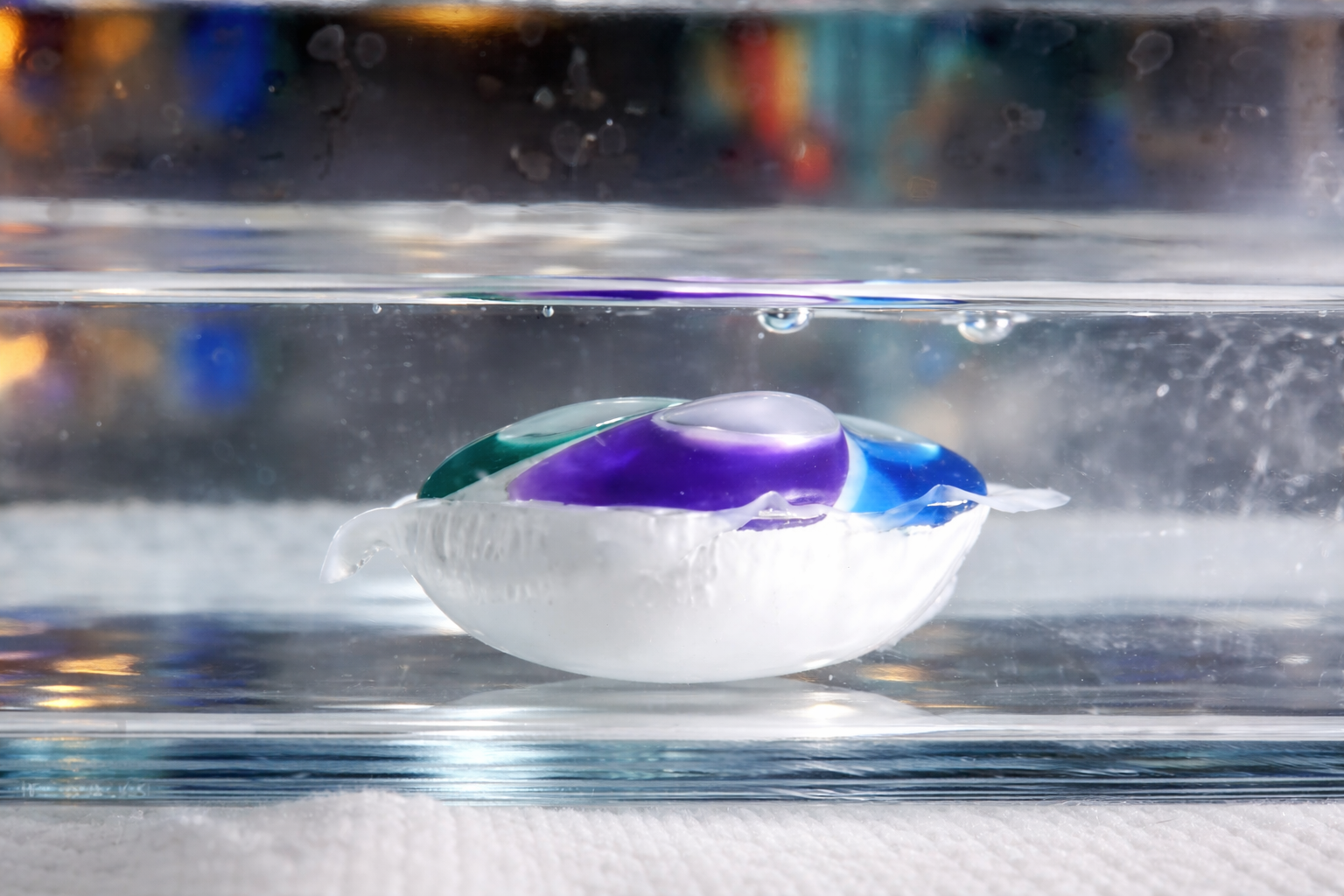
Powders and tablets solve this in a clever way: they keep the ingredients dry. In dry form, dormant enzymes can live side by side with oxygen bleaches such as sodium percarbonate. They don't react on the shelf. When water enters the machine, the percarbonate releases oxygen onto the stains and the enzymes wake up to digest food.
Structurally, solid detergents can carry both of the important cleaning mechanisms at once without destroying themselves.
So yes. Powders are strong. Tablets are strong too, but tablets have a structural pre-wash problem unless you do something to get detergent into the pre-wash. And gels are often chemically weaker on baked-on food, unless you have a specific reason to prefer them.
Anyway: basin fixed well enough. Child asleep. Dishwasher back together. Coffee still undrunk. I had reached a stable operating point.
Then I got a call from another daughter. She had missed the bus and needed a lift because it was extremely cold and she was extremely tired.
At the same time my phone was shouting reminders that I had an international meeting I was supposed to join remotely.
So I arranged with the older daughter at home that she would watch the little one, and then I joined the meeting from the car while driving out to collect the daughter who had missed the bus.
That is how time works in a household like ours. Tasks don't queue. They collide.
The meeting ended. I came home. Someone had taken my coffee off the worktop.
That is how I knew the children weren't merely existing around me. They were actively controlling the environment.
So I decided to write this explanation, in the hope that my wife reads it and understands the logic well enough that the next dishwasher cycle doesn't end in a drain fault. I am not really writing it for her. I am writing it because if I don't turn this day into an organised output, then this day was just grease and screws and cold coffee.
If anyone else finds it useful, husbands or wives, great.
The practical summary
Here is the practical summary, valid in Finland, with European machines and salt softeners:
Understand the machine: it recirculates a small amount of water. It works in stages. It needs a real pre-wash and a real main wash. This works best if nobody adds shards of glass to the system.
A tablet in the dispenser means the pre-wash is water only. Water on its own doesn't emulsify grease. Grease becomes sludge. Sludge blocks filters and sumps and contributes to drain problems such as E24.
Use loose powder if you want control. Powders can carry enzymes and oxygen bleach together. Gels rarely manage that.
Always add a small pre-wash dose. A teaspoon or a tablespoon of powder on top of the closed flap or in the pre-wash spot is enough to make the first fifteen minutes actually wash.
Keep the dishwasher salt topped up. Your machine softens its own water. If the salt has run out, you lose the advantage.
Dose less in soft water. In a machine with salt in it, use the first line or about a tablespoon for the main wash, not the maximum. Avoid overdosing, which can leave residue and etch glass permanently. This works, provided your coffee hasn't already moved into a solid state.
Use the Auto or Normal programme for dirty loads. Express and Eco often cut the temperature or the water volume, or skip the pre-wash altogether, in ways that make enzymes less effective and grease problems more likely.
Tablets cost more per wash. Powder is typically much cheaper, and pre-wash dosing costs almost nothing. Replicating the pre-wash with tablets would mean using two tablets, which is an economic decision worth making consciously.
Tablets also send PVA film down the drain with every wash. Powder usually comes in a cardboard box, which is easier to recycle.

If you have read this far, you now know more about dishwashers than I would ever have wanted to know when I woke up at 7:30 on a Wednesday intending to sleep in.
Somewhere in this house there is a cup of coffee that was never drunk. I assume it's with the lost socks, the misplaced screws and the part of my authority that disappears the moment I step into the kitchen.