
Attila József: A Little Dew
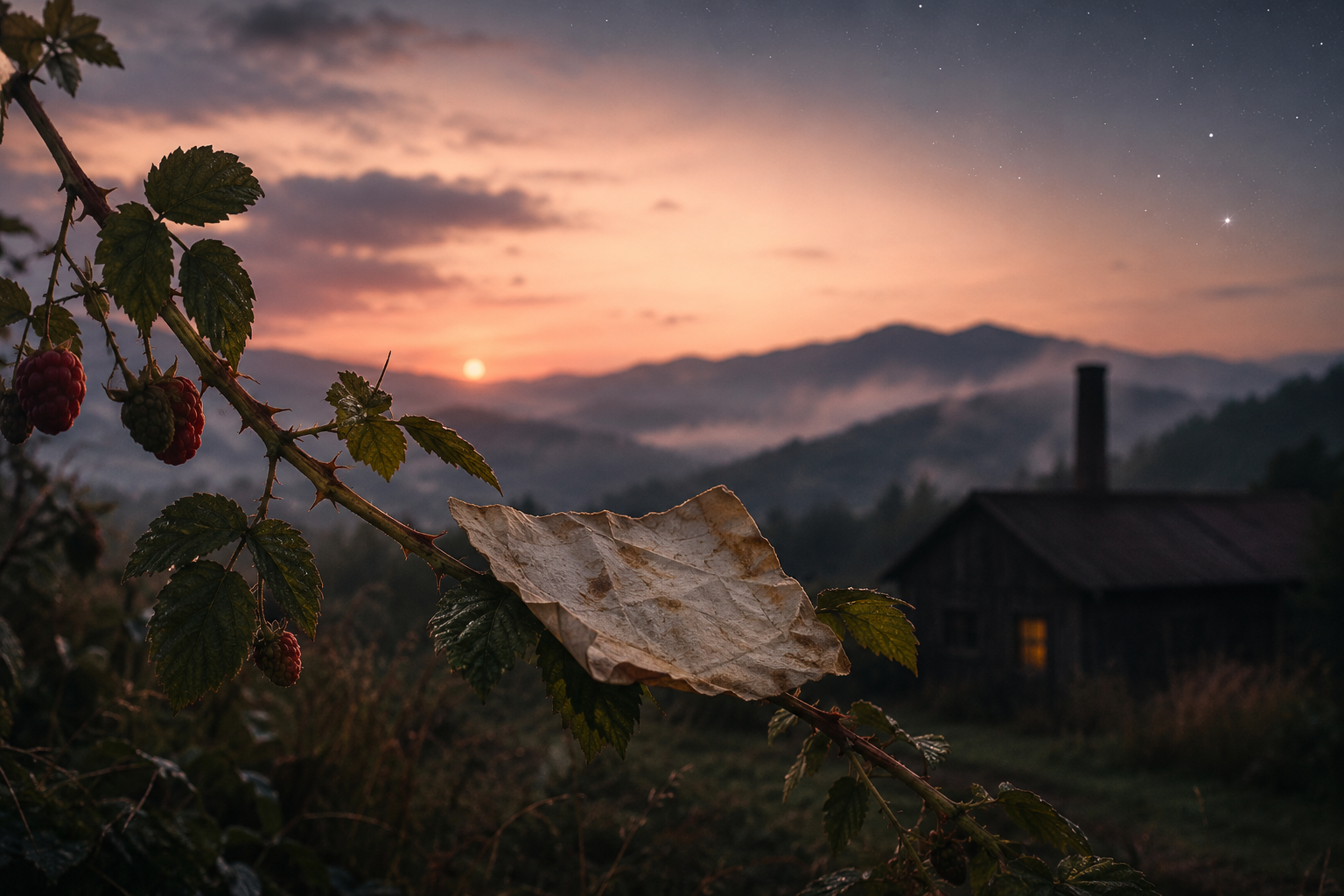
Today I read poetry. I do it far too rarely these days, even though there was a time when it was almost a self-evident way of being in the world. I grew up in Hungary, and like quite a few people who grew up there, I carry Attila József somewhere deep inside me, in one of those places everyday life doesn't usually reach.
Today I ran into one of his poems, one I had always thought of as a bit childish. The kind you learn at school, rattle off half-heartedly when your turn comes, and then never really think about again. I remember not understanding it back then.
Or, more honestly: I never really tried to.
But today it cut straight into me.
I don't know whether it's because I'm older, or wiser, or just tired enough to understand it, but all at once the poem wasn't childish.
It was frightening.
And maybe that is exactly why I wanted to work it through and write down what it tore open in me. Not so much what the poet “meant to say”, because I don't believe the value of poetry lies only in what a poet consciously decides to put on the page. Perhaps the poet is more of a prism: through him passes the thinned-out joy of ordinary people, their plain lives, their fear, their longing, and the everyday pain that mostly never gets said out loud.
And somewhere in that passing-through, the poet's own experience and the whole social zeitgeist of his age crystallise clear in a single piece of work.
I honestly hope my children never have to understand this poem the way it hit me today, with that elemental force, like a blow to the head. It brought back my uncle, who died not long ago, and everything I never said to him while I still could. The poem is Hungarian, and what follows here is an English rendering I made for this essay; where a single Hungarian word does the work, I quote it as it stands.
Attila József: A Little Dew
Crouching, the raspberry cane
sways; on its warm arm
a baggy, greasy scrap
of paper lies dozing.Soft land, the evening a pearl;
dense, braided foliage.
The mountain haze is trembling
on the hills, and my song.Well then, I worked faithfully,
humming, like the meadow.
How light the heaven is!
The workshop has gone dark.Tired and simple-minded,
or perhaps I am just good,
and I tremble like the grass
and like the stars.August 1929
At first glance, Attila József's Harmatocska looks like a small, gentle nature poem. There is a raspberry cane in it, an evening landscape, mountain haze, hills, a workshop, grass and stars. On paper, in other words, it all looks innocent enough. Almost the kind of thing you leaf past in a school anthology thinking: fine, nature, mood, next.
Except that under that quiet surface there is an almost unbearable depth. The poem gives a voice to a state that is hard to name: to tiredness, to goodness, to vulnerability, and to that strange mercy by which the world holds us in its lap while the same world is perfectly capable of wounding us.
The contradiction is already there in the first image:
Crouching, the raspberry cane
sways; on its warm arm
a baggy, greasy scrap
of paper lies dozing.
The raspberry cane almost turns into a person. It sways, it has a warm arm, and a scrap of paper is resting on that arm. The image is modest, even a little comic in an everyday way: a greasy, baggy piece of paper has snagged on a plant.
Litter in a bush, in other words.
But szendereg [lies dozing] changes everything. The paper isn't just litter. It is asleep. It is allowed to rest. It is being held.
You can read the raspberry cane as an image of the whole world. Fertile, sweet, warm, able to feed and to shelter. And the paper slowly becomes an image of the poet: thrown away, dirtied, used and probably used up, and yet something that could be full of meaning. You can write memories on paper, confessions, poems, a whole life. But the poem never tells us what is on the paper. It doesn't even tell us whether there is anything on it at all.
That silence matters.
The world doesn't have to read the paper in order to hold it. The paper is allowed to rest before anyone interprets it.
Even so, this first tenderness is not innocent. A raspberry cane has thorns. The same plant that carries sweet berries and holds out a warm arm can also scratch, snag and tear. A scrap of paper resting among thorns is an extremely fragile image. One of the poem's basic facts is in that first stanza already: the world is tender, but it is not safe. It holds you and wounds you in the same motion.
The second stanza widens that first image into a whole landscape:
Soft land, the evening a pearl;
dense, braided foliage.
The mountain haze is trembling
on the hills, and my song.
The surroundings are soft, precious and full. The land is soft, the evening a pearl, the foliage dense and braided. At first this feels consoling. The world around the poet is gentle, enclosing, almost motherly. But the very words that make that softness also hint at being shut in.
Fonott [braided] is not only a pretty word. It also means that something has been bound, wound and worked into itself. And tömött [dense] means there is very little room left in between. The foliage isn't only shelter. It is also a net. A roof. A sealed pocket.
And gyöngy az est [the evening a pearl] is a double-edged image too. A pearl is beautiful, valuable and shining, but it is born inside a closed shell, under pressure, out of sight. Beauty here isn't open freedom. It is enclosed beauty, light formed under pressure.
That is why the trembling at the end of the stanza matters so much:
“Hegyek párája rezg a halmokon s dalom.” [The mountain haze is trembling on the hills, and my song.]
The mountain haze trembles on the hills, and the poet's song trembles with it. The song doesn't stand outside the landscape and describe it calmly, the way a safe outside observer would. It is inside the same trembling enclosure. It belongs to the world of the haze, the hills, the evening and the braided foliage, and at the same time it shakes against them. The world takes the song in, and it also surrounds it completely.
This feels stronger still if you have read a bit more Attila József. His poems come back again and again to images of enclosure, of prison, of stars, of order and of cosmic structure. In Harmatocska the prison isn't made of iron. It is built out of tenderness: out of a warm arm, a pearl of an evening, braided foliage, haze, hills and stars.
And that is exactly why it hurts.
Comfort and captivity aren't opposites here. They are wired into the same system.
The third stanza brings in work:
Well then, I worked faithfully,
humming, like the meadow.
How light the heaven is!
The workshop has gone dark.
The speaker has worked faithfully, humming, like the meadow. There is no heroic pride in it. He doesn't set himself apart. He doesn't say, look at me, I carried the whole thing, I did it all properly. He simply worked. Quietly, faithfully, almost the way nature does it. The way a meadow hums, because a meadow's job is to be a meadow.
Then comes the poem's brutal turn, and at forty it no longer arrives as a mood. It hits you over the head:
Milyen könnyű a menny! [How light the heaven is!]
Heaven doesn't turn up here as a solemn religious destination, with trumpets and marble gates. It is light. Simple. Almost inviting. And this is where it lands on me that there is a point in a life at which a person is already looking upwards with longing. When they don't want another drip, another treatment, another round of fighting. When they would just like to rest, even among the thorns of the raspberry cane...
The line feels almost like a premonition, especially once you know how young Attila József was when he died. That is when it opens towards death.
And the next line sets earthly existence against it:
A műhely már sötét. [The workshop has gone dark.]
The workshop is the place of work, of duty, of making things and of being useful. Now it is dark. The day's work is over. In the plain human rhythm, work is followed by evening, evening by rest, earthly labour perhaps by heaven. The line gives you the sense of an ordinary order: you work, you get tired, the workshop goes dark, and something on the far side of the work is waiting.
Except that because the poem has already made the world tender and enclosing at once, the lightness of heaven takes on a double meaning. It is merciful, and it is dangerous. It could be release from the dark workshop, from the thorny raspberry cane, from the braided foliage and from the evening closed like a pearl. Heaven is light because the world, however beautiful it is, presses down on you.
The last stanza turns the whole landscape inwards:
Tired and simple-minded,
or perhaps I am just good,
and I tremble like the grass
and like the stars.
The speaker isn't sure how he ought to understand himself. Tired and együgyű [simple-minded]? Or perhaps just good? That uncertainty is heartbreaking. He doesn't even dare claim goodness for himself with any confidence. Goodness turns up as something small, defenceless, almost apologetic.
Maybe it is only tiredness.
Maybe from the outside it looks like stupidity.
Maybe being good, here, means giving in.
The last image ties together the lowest thing and the highest:
s reszketek, mint a fű és mint a csillagok. [and I tremble like the grass and like the stars.]
Grass is small, earthly, easily trampled. Stars are far away, cosmic, apparently eternal. And both of them tremble. The poet belongs to both worlds: to the low one and to the lifted-up one, to the earthly and to the heavenly, to the fragile and to the cosmic.
But not even the stars necessarily stand for freedom. In Attila József's poetry the stars can just as easily be images of cold order, of distance and of enclosure. So the trembling at the end doesn't settle the poem into peace. It stretches the vulnerability all the way from the grass to the stars.
The genius of the poem is in how quietly it does all of this. It doesn't explain suffering. It doesn't announce metaphysical despair. It hands us a greasy scrap of paper on the arm of a raspberry cane, a pearl of an evening, braided foliage, trembling haze, a darkening workshop, a light heaven, grass and stars. The images look small, and they compress a whole condition of existence into themselves.
It is as if the poet were that scrap of paper himself: thrown away, smudged, crumpled, and still full of something. Something that might be worth reading, if anyone looked at it as more than litter. And the world holds him warmly, but it has thorns. It is soft and pearl-like, and it closes in around him. Heaven appears as mercy, and also as escape from a beautiful prison.
So the poem isn't a simple picture of nature, or an evening moment after work, or a small mood piece. It is about how unbearably tender a thing it is to live in a world that holds you in its lap and wounds you with the same hand.
Maybe that is why Harmatocska can make you cry before you can quite say why. It touches a feeling that lives underneath ordinary language: the feeling of having done what you could, of being tired and defenceless, of wanting to be good, and of sitting in the lap of the very world that is hurting you.
Like the paper in the first stanza, the poem itself looks small, smudged by life and unassuming.
And there is still more in it than it says.
I don't know how you are supposed to end a text like this. Probably you aren't. I tend to carry things like this around for too long, and then they sit somewhere in my head, next to the coffee, and get in the way now and then. This time I wrote it down instead.
Here it is.
Do with it what you like.
![A man stands among clouds before a stairway of light, his shirt carrying the poem's line: Milyen könnyű a menny! [How light the heaven is!]](/img/milyen-konnyu-a-menny.jpg)